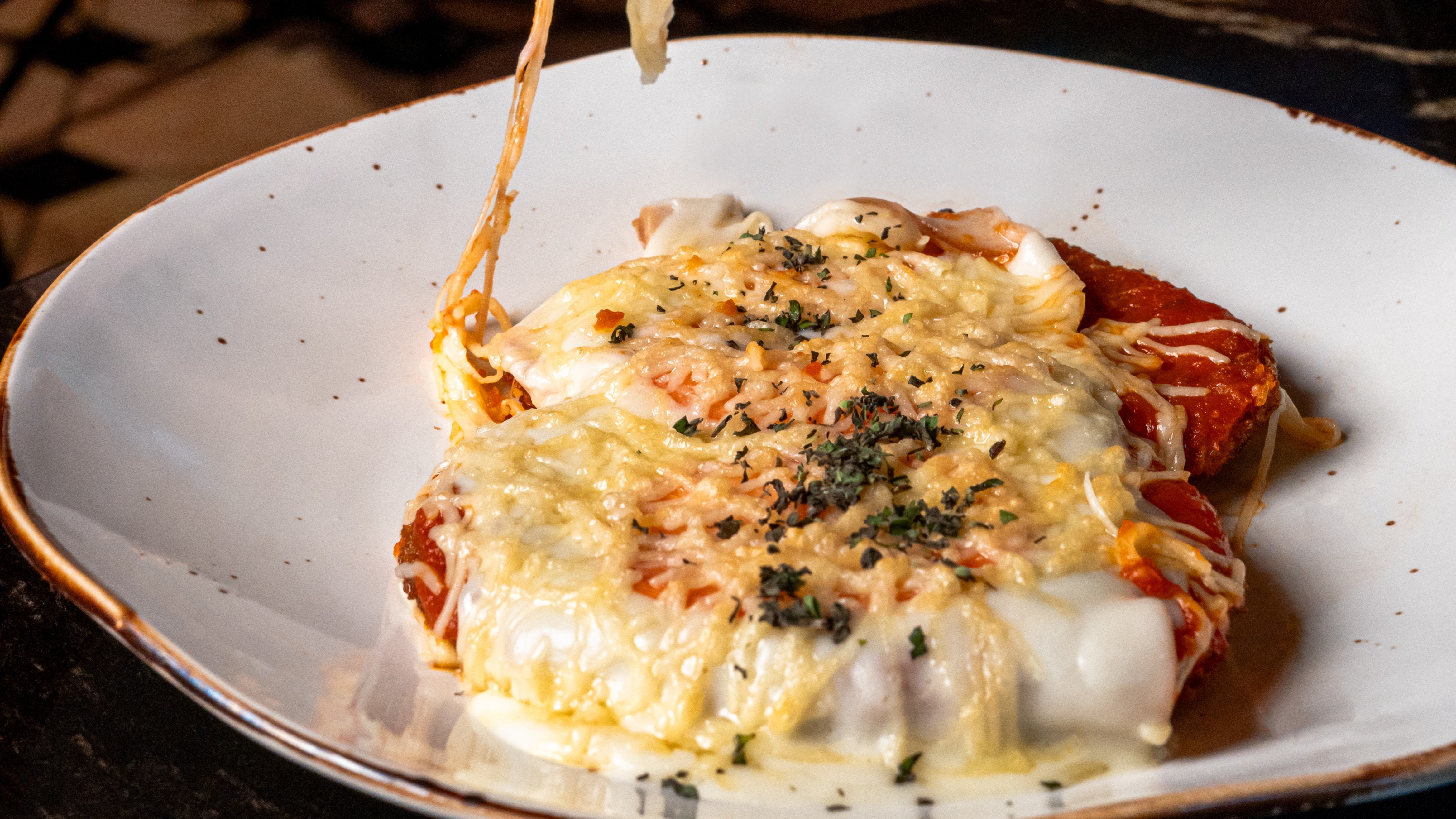
Milanesa is one of those dishes that tells you exactly where it comes from the moment you take a bite. Thin, tender, golden-breaded, and fried or baked to order, it has been a fixture on Argentine family tables for well over a century.
In Miami, where Argentine culture and cuisine have deep roots (opens in new tab), finding a truly authentic version of this classic is a worthwhile pursuit. This guide breaks down what milanesa actually is, why it matters in Argentine culinary tradition, and where to find it done right in South Florida.
What Is Argentinian Milanesa?
Milanesa is a breaded and cooked meat cutlet that arrived in Argentina with Italian immigrants during the 19th and early 20th centuries. The name traces back to Milan, Italy, where the original cotoletta alla milanese involved a bone-in veal cutlet, breaded and pan-fried in butter. As Italian immigrants settled across the Río de la Plata region, the technique adapted to local ingredients and habits, gradually becoming one of Argentina's most beloved everyday dishes.
The Argentine version is almost always made with thin cuts of beef, most commonly sliced from the round or loin. The cutlet is pounded flat, dipped in beaten egg seasoned with garlic and parsley, coated in fine breadcrumbs, and then either pan-fried in oil or baked. The result is a thin, crisp exterior that gives way to tender, flavorful meat inside. It is straightforward in method but deeply satisfying when the ingredients and technique are treated with care.
What separates the Argentinian milanesa from similar dishes found elsewhere is the emphasis on quality beef, the seasoning of the egg wash, and the texture of the crust. Done correctly, it is neither greasy nor heavy. It is a clean, well-balanced dish that feels homemade even in a restaurant setting, which is precisely why it has never gone out of style.
The Cultural Significance of Milanesa in Argentina
Few dishes in Argentina carry the kind of everyday emotional weight that milanesa does. It is the meal Argentine mothers and grandmothers made on school nights. It appears in neighborhood rotiserías, family restaurants, and high-end dining rooms alike. It crosses every socioeconomic line, every generation, and every region of the country.
In Argentine culture, food is rarely just sustenance. The table is where families gather, where conversations stretch long past the meal, where guests are welcomed. Milanesa fits naturally into this ethos because it is generous, shareable, and adaptable. It can be served simply with a squeeze of lemon and a side of mashed potatoes or papas fritas. It can be presented in a more elaborate way, topped with ingredients that elevate it into a full composed plate. Either way, the dish carries a sense of comfort and familiarity that connects Argentines to home no matter where they are.
For Argentine communities living in Miami, dishes like milanesa (opens in new tab) are not just menu items. They are connections to a culinary identity that travels well.
Traditional Accompaniments for Milanesa
Understanding how milanesa is traditionally served adds important context for anyone encountering it for the first time. The dish does not stand alone in Argentine dining. It is typically paired with accompaniments that balance and complement its crisp, savory character.
The most common pairings include:
- Papas fritas (french fries): The classic side, often served alongside in a simple plated presentation.
- Puré de papas (mashed potatoes): Smooth and buttery, a comforting alternative that many Argentines prefer.
- Fresh lemon: A wedge served on the side is standard. A squeeze of lemon over the breaded crust brightens the dish and cuts through any richness.
- Mixed salad: A light green salad dressed simply with olive oil and vinegar completes the plate and balances the heartiness of the cutlet.
These pairings reflect the Argentine approach to plating: clean, honest, ingredient-focused. Nothing overwhelms the main dish. The accompaniments exist to support the star of the plate, not compete with it.
Different Styles of Milanesa You Should Know
While the base preparation remains consistent, milanesa in Argentina appears in several well-established forms that are worth knowing before you sit down to order.
Milanesa a la napolitana is perhaps the most iconic variation. The cooked cutlet is topped with tomato sauce and melted cheese, sometimes with sliced ham beneath the cheese layer. Despite the name referencing Naples, the dish was actually invented in Buenos Aires at a restaurant in the 1940s. It has since become a staple of Argentine steakhouse menus and home kitchens.
Milanesa natural refers to the classic preparation without additional toppings: simply breaded, cooked, and served with the traditional accompaniments described above. It is the purest expression of the dish and often the best test of a kitchen's execution.
Sandwich de milanesa is exactly what it sounds like: the breaded cutlet served inside a bread roll, often with lettuce, tomato, and mayonnaise. It is street food at its finest, a beloved lunch option across Buenos Aires and beyond.
Each of these variations reflects a different context in Argentine food culture, from the casual grab-and-go to the sit-down family dinner to the celebratory restaurant meal.
Argentinian Food in Miami: A Growing Tradition
Miami's connection to Argentine cuisine is genuine and longstanding. The city has one of the largest Argentine communities in the United States, concentrated particularly in areas like Brickell, Miami Beach, Weston, and Doral. This presence has shaped the local restaurant scene in meaningful ways, with Argentine steakhouses, bakeries, and casual eateries serving food that reflects authentic traditions rather than adapted versions.
For food lovers in Miami (opens in new tab), this means access to real Argentine cooking without a flight to Buenos Aires. Dishes like empanadas, asado, and milanesa are available in settings that understand the cultural weight behind them, not just the recipe.
The search for the best Argentinian milanesa in Miami tends to lead diners toward restaurants that treat the entire Argentine menu as a cohesive whole, where the milanesa shares the table with premium grilled meats, traditional sides, and the kind of warm, unhurried hospitality that defines Argentine dining at its best.
Where to Eat Milanesa in Miami: Baires Grill
Baires Grill is built around the traditions of Argentine asado and the broader culinary heritage of Buenos Aires. With locations across South Florida, including Brickell (opens in new tab), Miami Beach (opens in new tab), Coral Gables (opens in new tab), Doral (opens in new tab), Weston (opens in new tab), and Sunny Isles (opens in new tab), the restaurant has established itself as one of the most recognizable names in Argentine dining in the region.
The experience at Baires Grill is rooted in Argentine culinary technique and the values that make Buenos Aires dining distinctive: premium ingredients, skilled preparation, and a dining room atmosphere that invites guests to slow down and enjoy. The menu moves through the full range of Argentine flavors, from the grill to traditional plates that connect to everyday Argentine food culture.
For anyone searching for traditional Argentine dishes in Miami, including milanesa and the full context of Argentine comfort food, Baires Grill is worth a visit. Check the current menu (opens in new tab) to see what is available at the location nearest to you, and use the locations page (opens in new tab) to find the address and hours for each South Florida restaurant.
Why Milanesa Belongs on Your Miami Dining List
Milanesa is not a dish that needs to be dressed up or explained away. It is exactly what it appears to be: honest, well-executed, deeply rooted in Argentine tradition. For anyone exploring Argentine food in Miami for the first time, it offers an accessible entry point into a cuisine that is built on craft and care.
For those already familiar with Argentine cooking, finding a version that respects the technique and uses quality beef is the goal. The difference between a milanesa made with attention and one that cuts corners is immediately apparent. The crust should shatter lightly at the fork. The meat should be tender without being overcooked. The seasoning should come through clearly without overpowering.
That standard is what Argentine food culture has always demanded of this dish. It is not a complicated ask. It simply requires a kitchen that takes it seriously.
Ready to Try It?
Milanesa is one of Argentina's most enduring contributions to the world's table. In Miami, you do not need to travel far to experience it properly. Baires Grill brings the spirit of Buenos Aires to South Florida, with a commitment to Argentine culinary tradition across every dish on the menu.
Explore the full menu at Baires Grill (opens in new tab), find your nearest South Florida location on the locations page (opens in new tab), and come taste what Argentine food in Miami is supposed to taste like.