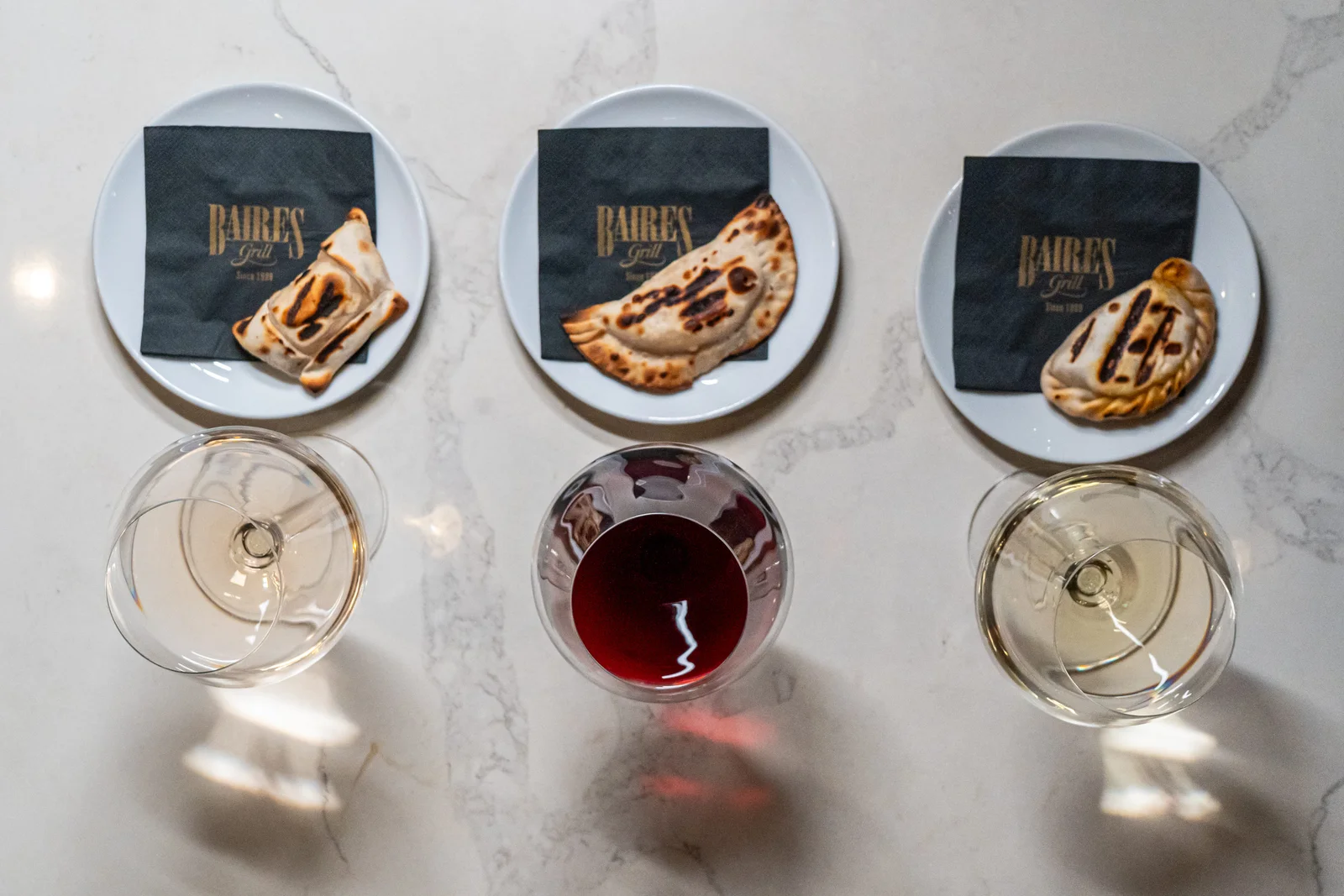
There is no such thing as a casual empanada in Argentina. Long before it lands on the table, an argentine empanada carries the weight of family tradition — shaped by hand, filled with care, and folded with a technique passed from grandmother to grandchild.
At Baires Grill (opens in new tab), that ritual is alive in every location, from Miami to New York to Orlando. These are not an afterthought on the menu. They are the opening act of a full Argentine dining experience, and they tell you everything you need to know about what kind of kitchen you're walking into.
What Makes an Argentine Empanada Different From Every Other
The word empanada exists across Latin America and even into Southern Europe, but the Argentine version occupies its own category entirely. The distinction starts with the dough — softer, slightly richer, built to be baked golden in a traditional horno de barro (clay oven) rather than deep-fried. The result is a pastry that holds its shape, develops a faint crispness on the edges, and stays tender in the center.
Then there is the filling. Argentine empanadas are defined by generosity and restraint at the same time: generous in the quality and quantity of what goes inside, restrained in the sense that the fillings are allowed to speak for themselves.
Classic Argentine beef empanadas use carne cortada a cuchillo, meaning the beef is hand-cut rather than ground. This produces a texture that is entirely different from the minced meat you'll find in other traditions. You get actual pieces of well-seasoned Argentine beef, often combined with hard-boiled egg, green onion, and a subtle touch of cumin and paprika. No filler. No shortcuts.
The Repulgue: Why the Fold Is a Signature, Not a Detail
One of the most overlooked aspects of Argentine empanada culture is the repulgue — the folded seal that closes the pastry. In Argentine home kitchens and traditional restaurants alike, the pattern of the fold is used to identify what's inside. A braided seal might signal beef. A different twist means chicken. A straight-pressed edge indicates a sweet filling. It is an edible label system that predates printed menus.
More than function, the repulgue is where the craft shows. A consistent, tight fold means the filling stays sealed during baking, the juices don't escape, and the pastry develops evenly. A sloppy seal means the opposite.
Argentine Empanadas as Part of a Larger Ritual
In Argentina, empanadas are rarely eaten in isolation. They arrive as part of a larger table spread — before the parrillada, alongside a glass of Malbec, shared in the middle of the table while the grill is still going. This communal eating culture is central to what Baires Grill replicates across all of its locations (opens in new tab).
Order the empanadas as a starter, then move into the main event: premium Argentine beef cuts, milanesas argentinas, and the full parrillada argentina experience. The menu is designed to move the way an Argentine meal moves: from small bites to large plates, from conversation to celebration.
If you're discovering Baires Grill for the first time, the empanadas are the right place to start. They give you the kitchen's philosophy in two or three bites.
Come for the Empanadas. Stay for Everything Argentina Has to Offer.
An argentine empanada is a small thing that carries a large story — about where Argentine cuisine comes from, what it values, and how it treats guests.
At Baires Grill, that story is told from the first bite to the last. Whether you're at the Brickell location in Miami, the Midtown spot in New York, or the International Drive restaurant in Orlando, the kitchen is working from the same set of standards: real Argentine beef, honest technique, and a dining room that wants you to feel like you made it to Buenos Aires without ever leaving the city.
View the full menu (opens in new tab) and find the location nearest you at bairesgrill.com (opens in new tab)