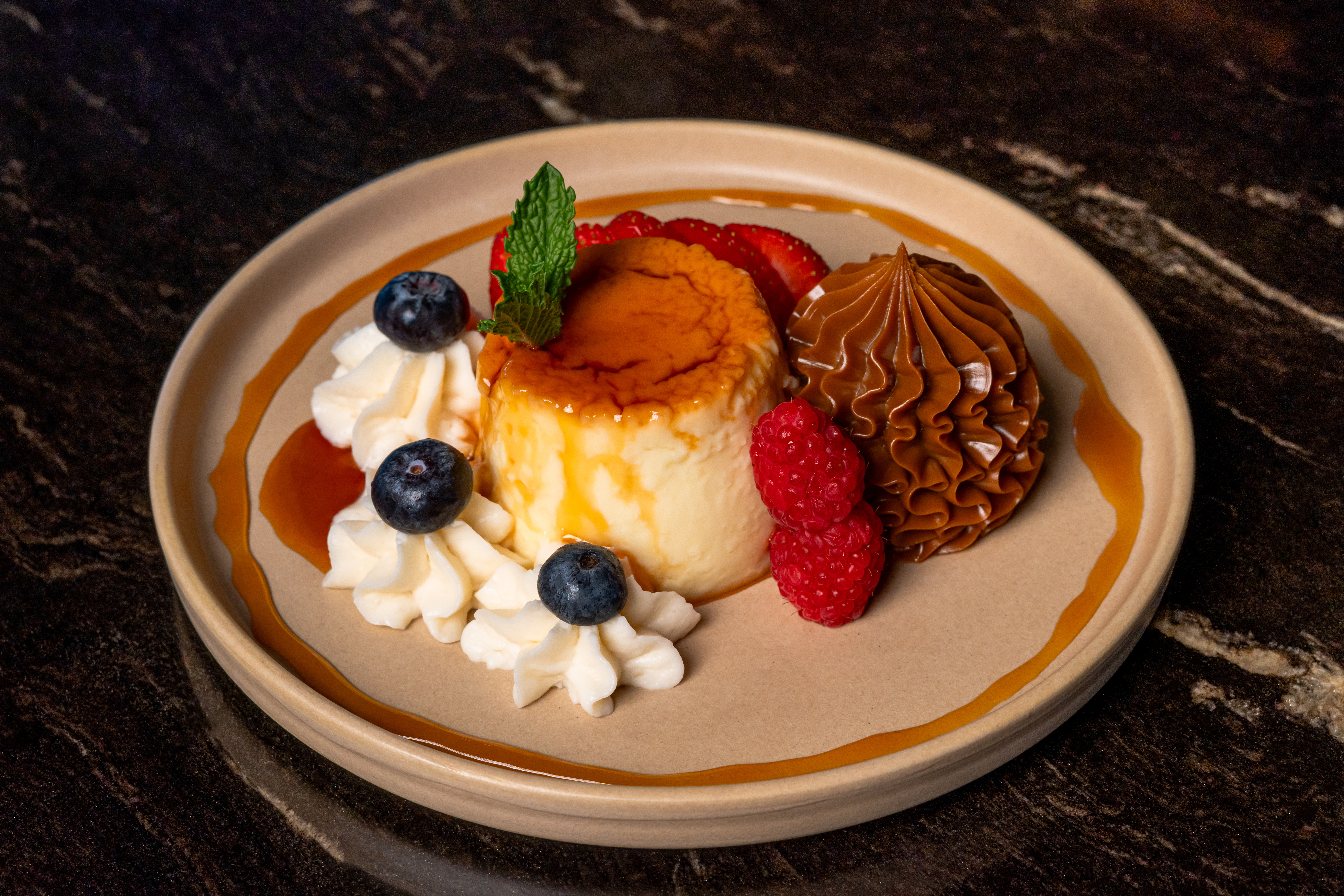
Argentine cuisine in South Florida offers more than just the familiar appeal of grilled beef. Dessert holds an important place in Argentine dining culture, and flan is one of its clearest expressions. Argentinian flan in Miami is neither a passing trend nor a novelty on a fusion menu. Instead, it remains an essential part of the dining experience, connecting guests around the table to a culinary tradition that spans generations.
This article explores what makes flan so central to Argentine food culture, how it differs from other versions you may have encountered, and why discovering it at the right restaurant can change how you appreciate the entire meal.
What Is Traditional Argentinian Flan?
Flan is a baked custard dessert set in a mold with a layer of caramel at the base. When the mold is inverted onto a plate, that caramel becomes a glossy, amber topping that pools around the custard. The result is a dessert that is simultaneously simple and precise: silky, smooth, and rich without being heavy.
The Argentine version of flan shares its roots with Spanish and French custard traditions brought to South America during the colonial period, but it developed its own identity over centuries of local adaptation.
In Argentina, flan is not a restaurant showpiece reserved for special occasions. It is everyday food, the kind of dessert that appears at family Sunday lunches, neighborhood parrillas, and corner cafes with equal frequency. That normalcy is part of what makes it meaningful. A traditional Argentinian flan communicates something about Argentine hospitality (opens in new tab): the meal is not finished until everyone at the table has been taken care of.
The Texture That Sets It Apart
The most distinguishing characteristic of a well-made Argentinian flan is its texture. It should be firm enough to hold its shape when unmolded but tender enough to yield completely to a spoon, with no rubbery resistance and no visible air pockets. Achieving that balance requires patience and attention. The custard is typically cooked low and slow in a water bath, a bain-marie, which insulates the mixture from direct heat and prevents the proteins from tightening too aggressively.
The caramel itself is not an afterthought. It needs to be cooked long enough to develop a slight bitterness that offsets the sweetness of the custard below it. A caramel that tastes only of sugar reads as flat. A caramel that has darkened properly introduces depth, a faint smokiness, and a contrast that makes each bite more interesting than the last.
How Flan Is Served in Argentina
In Argentine dining culture, flan is almost always served with a topping, and the two most common choices are dulce de leche and crema. Dulce de leche is a slow-cooked caramel spread made from milk and sugar that is deeply embedded in Argentine culinary identity. It appears in pastries, sandwiches, cakes, and ice cream across the country, and spooned over a slice of flan it adds a second layer of caramel complexity that is distinct from the baked caramel beneath. Crema, a fresh dairy cream, provides richness and a cool contrast to the custard.
Some diners prefer one, some prefer both, and the combination of flan with both dulce de leche and crema is a classic pairing that has its own name in Argentina: flan mixto. If you encounter that term on a menu, it is a reliable indicator that the restaurant takes its Argentine dessert program seriously.
Why Flan Belongs at the End of an Argentine Meal
Argentine dining is structured around abundance and generosity. An asado, the traditional Argentine barbecue (opens in new tab), moves through multiple rounds of food: a starter of grilled provoleta or empanadas, followed by a succession of prime cuts, sausages, and offal cooked over wood or charcoal. The pacing is deliberately slow. Guests are expected to linger, to refill their glasses, and to continue the conversation long after the last piece of meat has been carved.
Within that structure, dessert serves a specific function. It signals that the celebration is winding down on the highest possible note. A dessert that requires effort to eat would break the rhythm. Flan works precisely because it does not demand anything from the person eating it. It is cool, soft, and uncomplicated to consume. The caramel and dulce de leche do the work of delivering flavor, and the diner simply receives it.
That dynamic is one reason flan has maintained its status in Argentine culture while more elaborate desserts have come and gone. It fits the context of the meal perfectly.
Argentinian Desserts in Miami: A Growing Awareness
Miami's dining (opens in new tab) scene has become increasingly sophisticated about Latin American culinary traditions over the past decade, and Argentine cuisine has benefited from that shift. Diners in Brickell, Miami Beach, Coral Gables, and Doral are more likely than ever to seek out not just Argentine steak but the full arc of an Argentine meal, from the first empanada to the last spoonful of flan.
The demand for authentic Argentinian desserts in Miami reflects a broader appetite for culinary depth. Visitors and residents alike are less satisfied with the version of a cuisine that stops at its most famous export. They want to understand the complete picture, and flan is part of that picture in a way that is hard to overstate.
Finding a flan dessert in Miami that meets the standard set by the tradition is a different exercise from finding a steak. The steak gets the menu real estate, the photography, and the front-of-house explanation. Flan tends to occupy a quieter corner of the menu. The restaurants that get it right are usually the ones that understand the entire Argentine meal, not just its most dramatic middle act.
Baires Grill and the Argentine Dining Experience in Miami
Baires Grill operates multiple locations (opens in new tab) across South Florida, including Brickell, Miami Beach, Sunny Isles, Coral Gables, and Doral, as well as locations in Fort Lauderdale (Las Olas), Weston, Orlando, and New York.
The brand was built around the Argentine asado tradition, and its culinary identity is grounded in the same principles that define serious Argentine dining: premium cuts, traditional technique, and the kind of warm hospitality that makes a table feel like it belongs to the guests for the duration of the meal.
That culinary philosophy does not stop at the main course. A restaurant that takes Argentine food seriously enough to grill over live fire and serve vacío and other cuts that rarely appear on non-Argentine menus is a restaurant that understands what the full meal should feel like.
For guests who want to experience Argentinian flan in Miami within the context of a genuinely Argentine dining experience, that alignment matters. The dessert makes more sense when the rest of the meal that preceded it was built with the same intention.
Whether you are visiting the Baires Grill location in Brickell after a weeknight dinner, settling in at the Miami Beach location on Collins Avenue for a longer evening, or exploring the Doral or Coral Gables dining rooms, the experience is designed to reflect the spirit of Buenos Aires dining culture from the first bite to the last.
For the most current dessert menu details and flan availability at each location, check directly with the specific Baires Grill location you plan to visit, as offerings can vary and are updated seasonally. [FILL IN: confirm flan is currently on the dessert menu at specific locations]
What to Know Before You Order Flan in Miami
If you are new to Argentine flan or returning to it after a long time away, a few things are worth keeping in mind when you order.
Ask about the preparation. A flan that was made in-house and unmolded to order is a different experience from one that was prepared off-site and plated earlier in the service. The texture of a freshly unmolded flan is noticeably better.
Consider the pairing. If the menu offers dulce de leche, crema, or both alongside the flan, try the combination rather than defaulting to one or the other. The interplay between the baked caramel, the spread, and the cream is where the dessert shows its full range.
Give it time. Argentine dining is not fast food. If you rush to dessert before the main course has settled, you will not appreciate the flan the way it deserves to be appreciated. Follow the rhythm of the meal.
Share if you want, but you probably won't. Flan portions at serious Argentine restaurants tend to be individual. It is the kind of dessert that inspires a certain protectiveness in the person eating it.
The Right Way to Finish an Argentine Meal in Miami
A great Argentine steak deserves a great Argentine ending. The grilled meats, the provoleta, the empanadas: they are all part of a meal that has been constructed with intention, and the dessert course should reflect that same intention.
Argentinian flan in Miami, when made with care and served in the right context, is not a consolation prize for people who are too full for something more dramatic. It is the quiet, confident conclusion to a meal built on genuine culinary tradition.
If you have been spending all your attention on the main course at Argentine restaurants, the flan is a reason to stay a little longer. Reserve a table (opens in new tab) at your nearest Baires Grill location, take your time with the asado, and let the meal finish the way it was meant to.