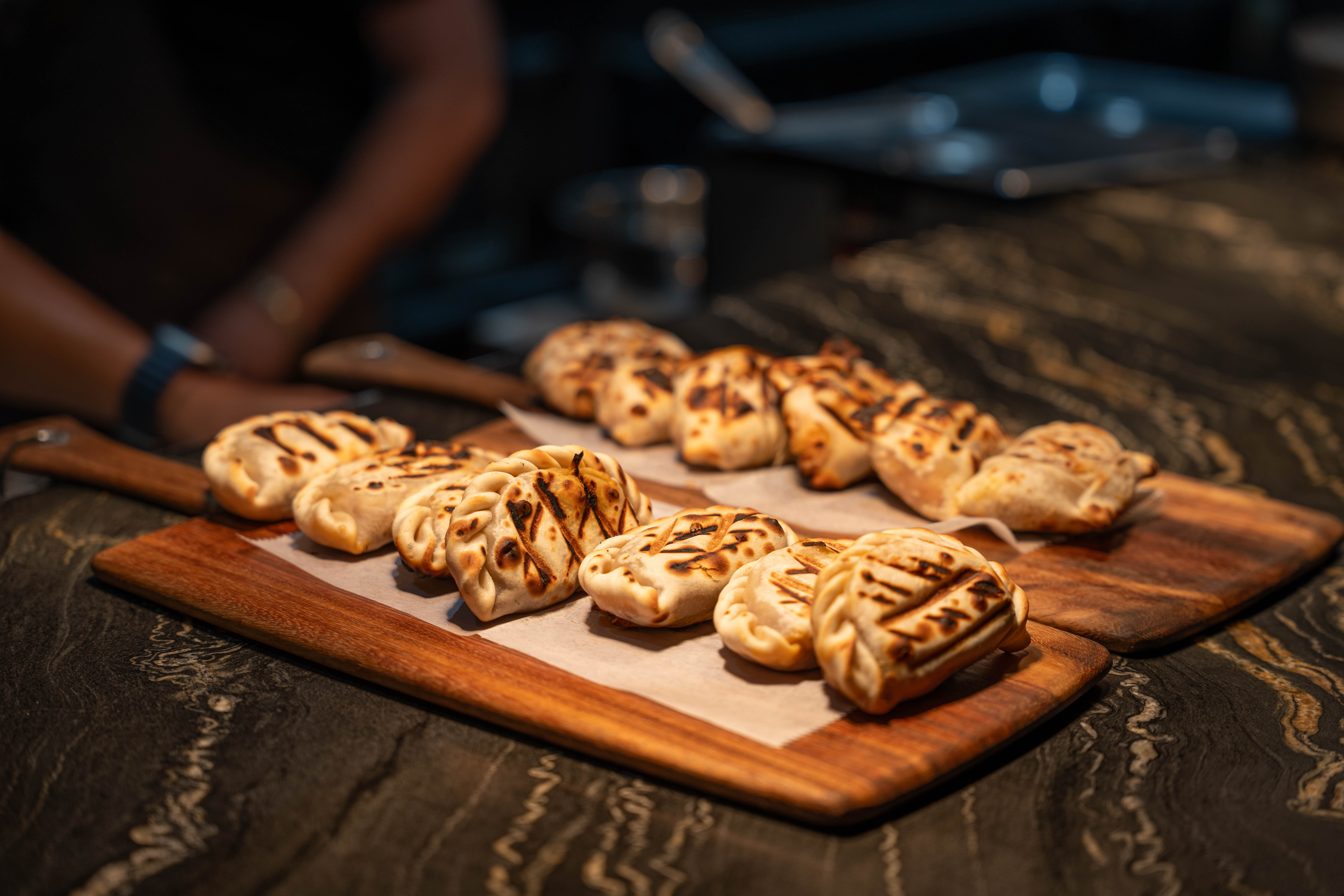
Few foods in the world inspire the kind of passionate, almost combative regional pride that the empanada does in Argentina. Ask an Argentine where the best empanada comes from and you will start an argument that outlasts dinner. Juicy or dry? Fried or baked? Hand-cut beef or ground? Raisins yes or raisins absolutely not? The answers depend entirely on which province raised the person holding the fork, and every answer comes with a story rooted in centuries of local tradition, agricultural history, and cultural identity.
This is not a food that simply feeds people. It is a declaration of origin. And understanding that distinction is the first step toward appreciating why every empanada at Baires Grill (opens in new tab)is treated not as a starter but as a statement.
What Is an Empanada, Exactly?
The word comes from the Spanish verb empanar, meaning to wrap in bread. The concept, a filling sealed inside pastry, arrived in South America with Spanish colonizers in the 16th century, itself descended from Moorish-influenced recipes brought to the Iberian Peninsula centuries earlier.
But what happened next in Argentina is what makes the story worth telling. As the empanada spread across a vast, geographically diverse country, each region adapted it to what grew in local soil, what grazed on local grassland, and what a particular community needed from a meal. Over four centuries, those adaptations calcified into tradition, and tradition hardened into identity.
Today the empanada is recognized by UNESCO as part of the Intangible Cultural Heritage of Humanity. In Argentina, it is simply called lunch (opens in new tab).
The Repulgue: Argentina's Edible Passport Stamp
Before exploring the provinces, there is one concept that unlocks the entire geography of Argentine empanadas: the repulgue.
The repulgue is the braided or folded edge that seals the dough shut. It is decorative, yes. But in Argentina it is far more than ornament. Historically, in households and bakeries producing multiple fillings at once, the repulgue pattern was the code that told the diner exactly what was inside. A certain number of folds, a particular twist, a pressed edge versus a pinched one: each signaled the filling, the region, and sometimes the specific cook who made it.
In professional kitchens, the skill of the repulgue is taken seriously. A sloppy seal means a poorly made empanada. A precise, rhythmic braid means the cook was trained properly, cares about the craft, and probably has an opinionated grandmother watching over their shoulder.
Province by Province: Argentina's Regional Empanada Map
Salta: The Gold Standard of the Northwest
Salteñas are widely considered the benchmark by which other Argentine empanadas are judged, though Saltenos themselves would phrase that more bluntly: they would say their empanadas are simply the best, and the rest are variations of an inferior theme.
The saltena is small, round, and uncompromisingly juicy. The filling is built on hand-cut beef, potatoes, hard-boiled egg, green onion, and enough chili pepper to produce genuine warmth. The critical technique is the amount of fat and moisture deliberately left in the filling, so that when the empanada is bitten into, liquid runs. A dry saltena is a failed saltena.
Traditionally baked in wood-fired clay ovens called tatakua or pirca, the crust develops a thin, slightly smoky crispness that contrasts with the molten interior. They are served with a side of red pepper sauce called llajua, and the proper method is to eat them standing up at a market stall, ideally before 11am.
Tucuman: Where Empanadas Become a Civic Event
Tucuman calls itself the empanada capital of Argentina, a title it defends with a national empanada festival held in the provincial city of Famaillá every September. Thousands of empanadas are judged on filling, dough quality, cooking method, and repulgue precision.
The tucumana filling is primarily ground or finely chopped beef, onion, and hard-boiled egg, kept simple enough that the quality of the meat carries the flavor. The dough is typically fried rather than baked, producing a blistered, golden exterior that shatters slightly on the first bite. Tucumanos take the frying oil seriously. Lard, used in traditional recipes, produces a flavor depth that vegetable oil cannot replicate.
Mendoza: Wine Country Empanadas
Mendoza sits at the base of the Andes, and its empanada reflects the agricultural abundance of a wine-producing region. Mendozinas are notable for the volume of onion in the filling: a ratio of onion to meat that would alarm a Buenos Aires cook but that, when caramelized slowly, adds a sweetness that balances the fat in the beef.
Mendoza also has a stronger tradition of incorporating regional spices, cumin in particular, and occasionally olives. The empanadas tend to be baked rather than fried, though the dough is often enriched with animal fat to keep it supple. In Mendoza, the correct pairing is a glass of Malbec. This is not optional.
Buenos Aires: The Porteña Empanada and the Steakhouse Tradition
The porteña empanada, born in the capital, reflects Buenos Aires's identity as a cosmopolitan, European-influenced city. It is more refined, more restrained, and, depending on who you ask, either perfectly balanced or disappointingly mild compared to the northwestern provinces.
The filling uses ground beef (though carne cortada a cuchillo, hand-cut knife beef, signals a more traditional or upscale preparation), onion, hard-boiled egg, green olive, and sometimes a pinch of paprika. The dough is thinner and more delicate. The empanadas are almost always baked.
In the context of the Buenos Aires parrilla tradition, the steakhouse-style porteña empanada has a specific role: it is the opening act before the main event of the grill. It sets the tone, warms the table, and signals to guests that the kitchen understands Argentine hospitality at its core. This is the tradition that Baires Grill brings to the table.
Corrientes and the Northeast: Cheese, Corn, and River Country
In the northeastern provinces, the landscape shifts to tropical humidity, river delta, and yerba mate country. Here, empanadas lean toward ingredients with no counterpart in the highlands: fresh local cheese, corn (choclo), and occasionally surubi, a large catfish pulled from the Parana river.
These versions are softer, often simpler, and reflect a regional food culture where dairy and agricultural crops dominate over beef. They are less famous internationally but represent an important argument against the idea that Argentine empanadas are a single, unified category.
How Baires Grill Honors This Tradition
At Baires Grill, the empanada is not a throwaway appetizer. It is a deliberate tribute to the Argentine asado tradition and the Buenos Aires parrilla culture that defines the brand's culinary identity.
The kitchen prepares empanadas with the porteña philosophy at its center: quality filling, carefully crafted dough, and a repulgue that signals craft rather than speed. The empanadas serve as the entry point to a meal built on the same principles that have governed Argentine steakhouse hospitality for generations: respect for the ingredient, patience with the technique, and warmth at the table.
Baires Grill locations (opens in new tab) across Miami (Brickell, Miami Beach, Sunny Isles, Coral Gables, Doral), Orlando, Fort Lauderdale (Las Olas), Weston, and New York City each serve a menu rooted in these Argentine traditions. For diners in the United States looking to experience the full arc of Argentine food culture, starting with empanadas and moving through to premium cuts cooked over live fire, Baires Grill is the closest thing to Buenos Aires without a boarding pass.
Experience Argentine Empanada Culture at Baires Grill
Argentina's empanada map is a living record of the country's history, geography, and stubbornly local pride. Every province, every fold, every bite of hand-cut beef or slow-caramelized onion carries that weight.
At Baires Grill, we carry some of that weight too. Our empanadas are the first word in a meal that continues through premium cuts, fire-kissed proteins, and the kind of hospitality that Buenos Aires built its reputation on. Whether you are discovering Argentine food for the first time or looking for a kitchen that takes the tradition seriously, the table is ready.
Find your nearest Baires Grill location in Miami, Orlando, Fort Lauderdale, Weston, or New York City and reserve your table today at bairesgrill.com (opens in new tab).